About
Public meetings, worth taking part in
We structure the queue, surface what the room supports, and keep every question in context — so residents can see the line and be heard, and moderators can run the room with confidence.
Why it exists
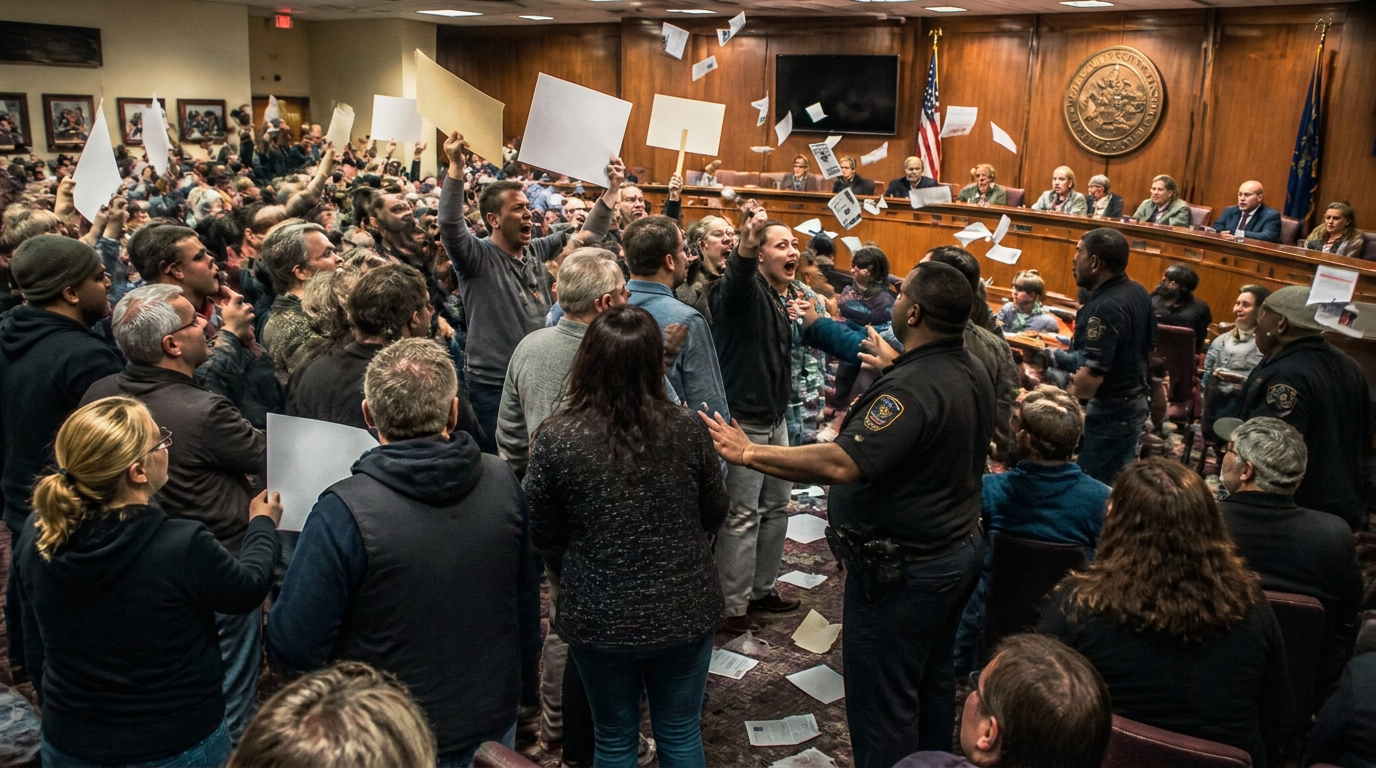 The problem
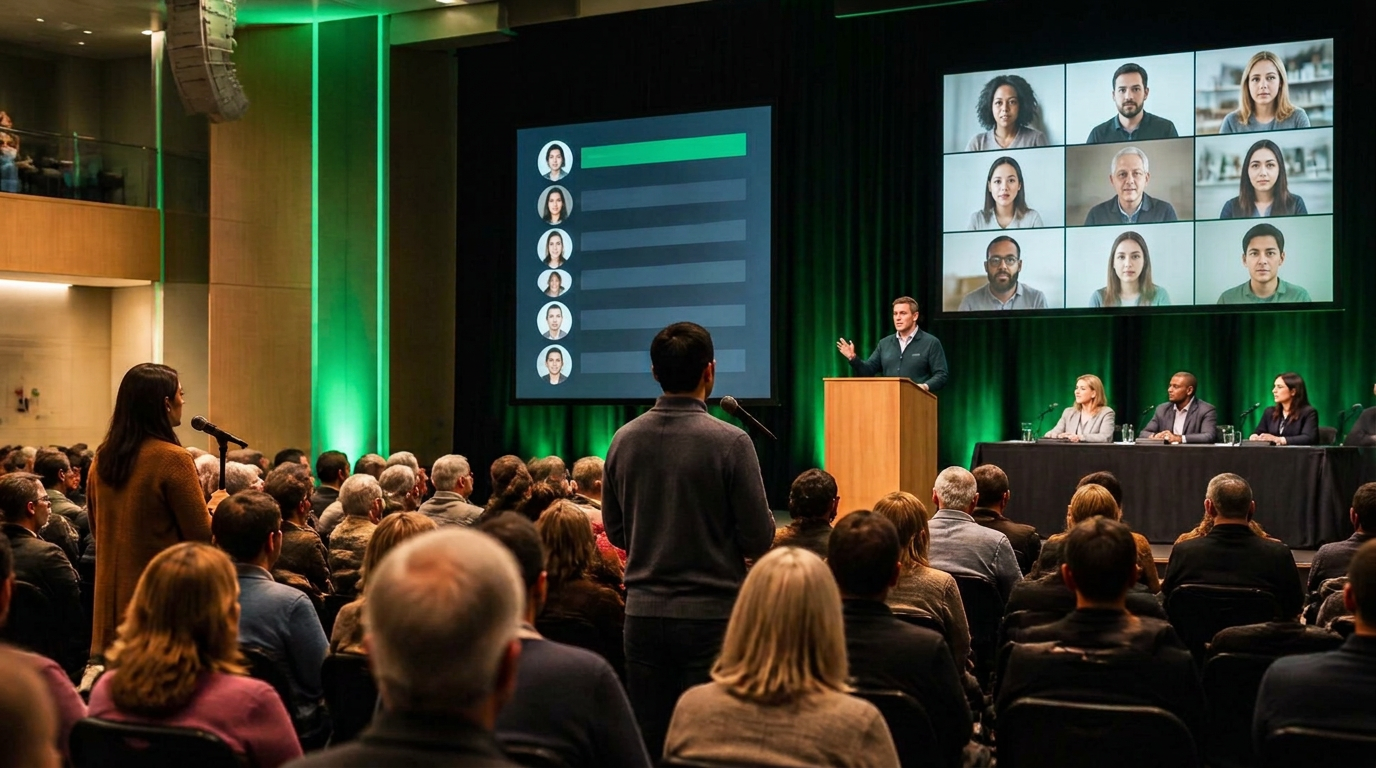 The solution
Commercially available webinar and streaming tools were built for broadcasts, not for the back-and-forth of a town hall. They make it easy for an official to talk and hard for a community to be heard: no shared queue, no way to see which questions people actually care about, and no record once the call ends.
A public meeting is a piece of civic infrastructure. It deserves software that treats the audience as participants with rights — to ask, to be seen asking, and to find the answer later.
What the platform does
- A live question queue. Questions arrive from the room and from home, other residents back the ones they care about, and the moderator sets the final order — support gives a question priority, it never jumps the queue on its own.
- The moderator stays in charge. Popularity informs the order, it does not decide it: a moderator can prioritise an unpopular but important question, or hold one back, and every such action is recorded.
- Moderation with a paper trail. Every moderating action is recorded, so the fairness of a meeting can be checked afterwards.
- Works with the video you already use. Zoom, Google Meet, Teams, YouTube Live, Jitsi, or a plain link out.
- A durable record. Meetings, questions and answers are kept, not quietly aged out, so the public record stays complete.
The research behind it
Prytaneum is built on Prytaneum, a project of the TeCD-Lab at the University of California, Riverside, directed by Prof. Kevin Esterling. Prytaneum grew out of work on online deliberation and constituent communication — including the Connecting to Congress research programme — testing how elected officials and the people they represent can meet online in a way that is genuinely two-way.
Prytaneum is © 2022 University of California, Riverside, licensed under the UCR Academic Software License.
Team
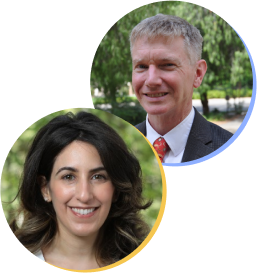
Prytaneum was built by the University of California, Riverside’s Technology, Communication and Democracy Lab (TeCD-Lab), led by lab director Prof. Kevin Esterling and associate director Prof. Mariam Salloum.
Together with the Congressional Management Foundation, they co-led the Connecting to Congress research team. With National Science Foundation support, that work studied how technology can help constituents be heard on important public policy.
With seed funding from the Democracy Fund, the UCR TeCD-Lab developed Prytaneum from more than a decade of research into effective online town halls. The result is an open-source setting for constructive, many-participant exchanges between public officials and the communities they represent.
How we treat what you say
Contributions to a public meeting are part of the public record, and we keep them. You can still ask for your own contributions to be withdrawn: the text is removed and your name detached, while the fact that a contribution existed stays, so transcripts remain honest. The privacy policy sets this out in full.